Knee Pain Shouldn’t Be Your Normal
Are you experiencing knee pain during or after squatting? There are many reasons this may be occurring, but today, we’re focusing on one of the most common issues we see – your knees going forward while squatting.

This often occurs due to a lack of engagement with the correct muscles that control the sitting and squatting mechanics of the body – the quadriceps, the large muscle above the knee covering the front of the thigh.
One way you can easily discover if this is something you’re doing is to do a squat with just your body weight while watching your form in the mirror. If you notice your knees jutting forward over your feet and your heels coming up, then your quadriceps are not benign properly engaged. As you can see with (woman in video’s name), her body is stacked above her feet and her back leans slightly forward. , thus putting the brunt of her weight on the balls of her feet and forcing her knees to work extra hard to stabilize the motion.
This puts an excessive amount of stress on the knee joints, as they must work extra hard to stabilize the downward motion while her weight is balanced on the balls of her feet. This stress results in knee pain while squatting, and is due to the lack of use of the quadriceps.
Start Squatting With a Hip Hinge
The simplest way to correct this mechanical error is to implement a method called a “hip hinge”.
A hip hinge is a technique that focuses on reaching the butt back and down simultaneously to sit down in a chair, thus engaging the quad muscles and eliminating excess knee tension.
As we see in the video, _name_, engages her quadriceps muscles as she smoothly lowers herself to the chair, thus stabilizing her knee joints and enabling her feet to remain fully planted on the floor as she sits back.
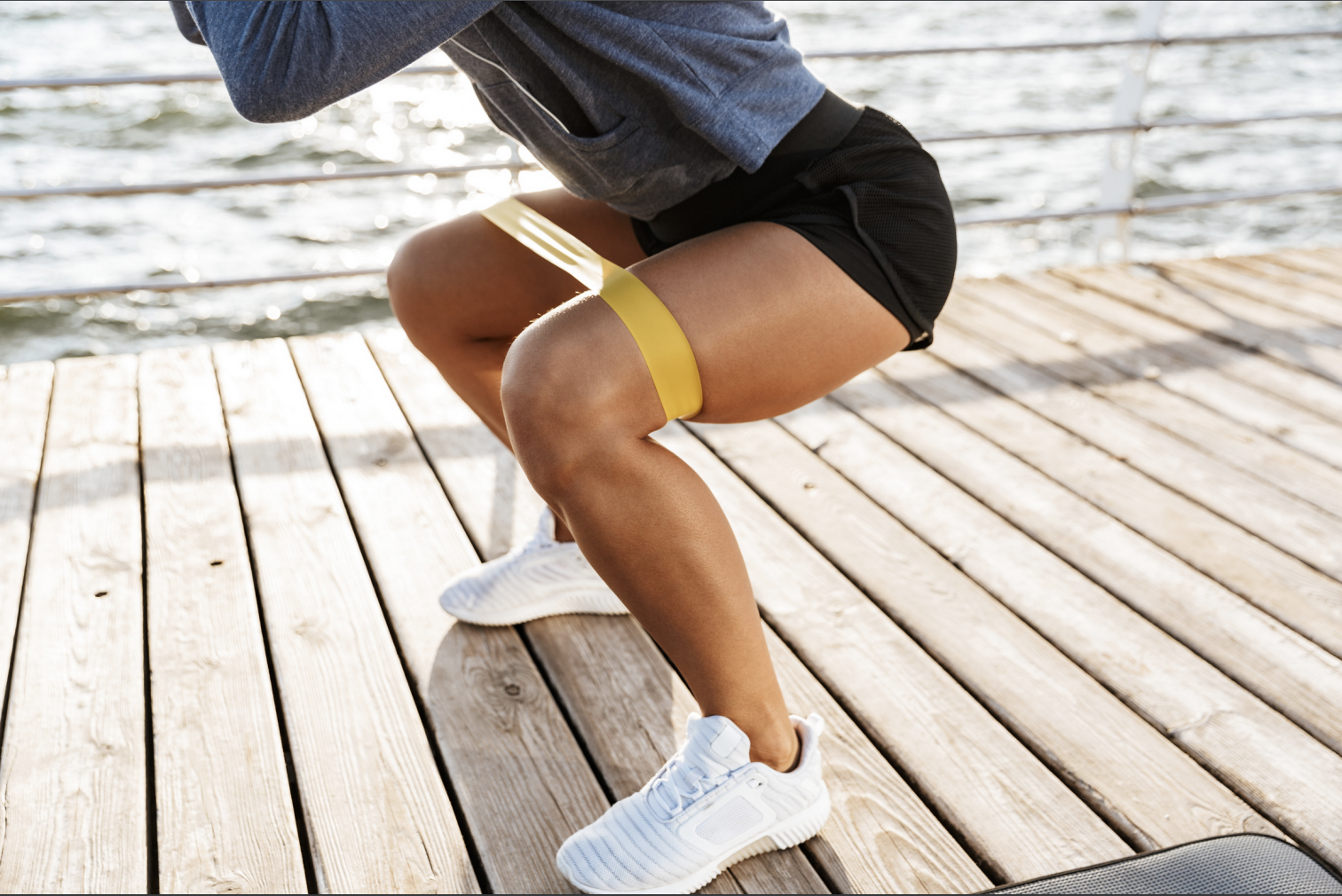 Key Points
When implementing the hip hinge technique at home, start by bringing your hands forward as if they were placed flat on the table. As you begin the squat, reach forward with them as if you were sliding them across the table as you push your butt back and down into the chair.
Working on this mechanism with a chair behind you to stop the sitting motion is a key proprioceptive practice that will enable your subconscious mind to improve its confidence in the ability to execute the motion properly and reduce your risk of injury when you go to add weight to the exercise.
Results
The hip hinge method significantly reduces the tension put on your knee joints while squatting. By doing this, we optimize the benefits of the exercise while simultaneously working to eliminate lingering knee pain.
CTA
For more information regarding chronic knee pain, check out this blog which dives deeper into the relationship between EDS and hyper-mobility concerning knee pain. The team at Parr PT in Austin is here to help, please reach out to us to discuss your conditions and schedule a consultation.